Consideration of Emerging Trends.
I am considering emerging trends in AR and web based technologies throughout my project by using webAR (8th Wall) which allows the experience to be accessed without requiring an app download, lowering barriers of economic accessibility and expanding reach across more devices.
Modelling.
To begin creating my 3D model in Blender, I used a free, CC attributed uterus model that I could later adapt by adding endometriosis lesions and adhesions. Starting with a licensed model gave me an anatomically accurate base while still allowing flexibility for modification. I imported the model in glTF format, which preserved scale, materials, and geometry, making it suitable for editing in Blender and for later export into platforms such as 8th Wall for WebAR deployment.
I also developed the platform with future expansion in mind so that the AR experience could remain relevant as research, treatment, and web-based AR technologies continue to evolve.
Uterus model with CCBY copywright.(Sketchfab)
This model supports the ethical and inclusive aims of this project by focusing on education rather than identity. The model is used to show where endometriosis develops, not to represent gender, which helps keep the experience inclusive of people who don’t identify as Female but are affected by the condition. Adding lesions and adhesions allows the focus to remain on the medical reality of endometriosis rather than idealised anatomy.
Mood Board of anatomical references for adding endometriosis to my Blender Model.
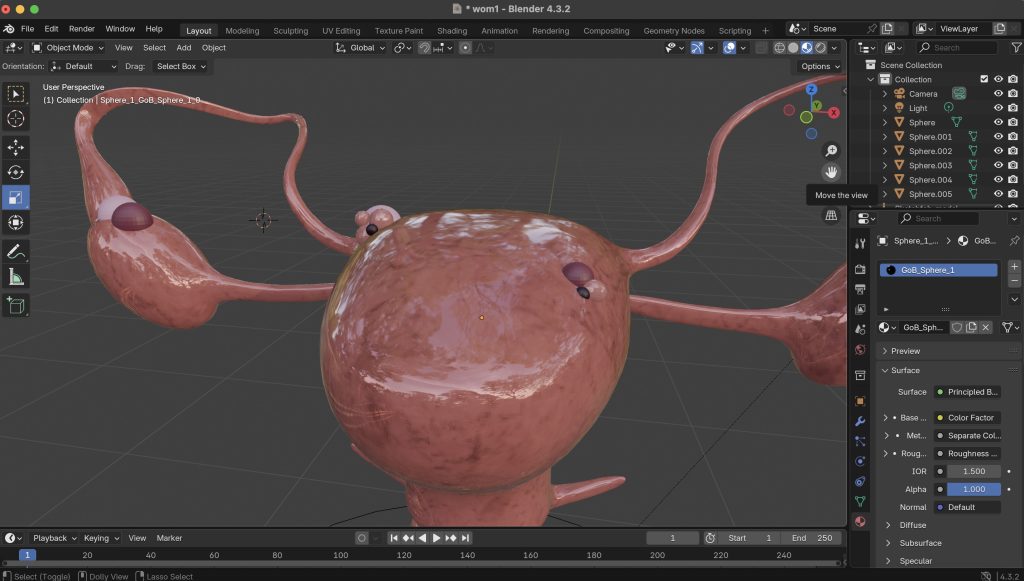
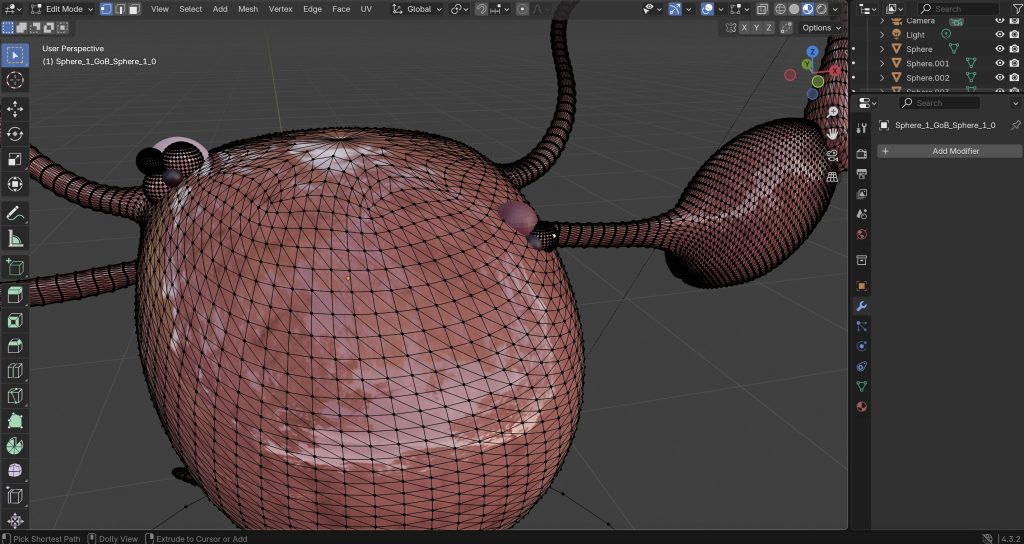
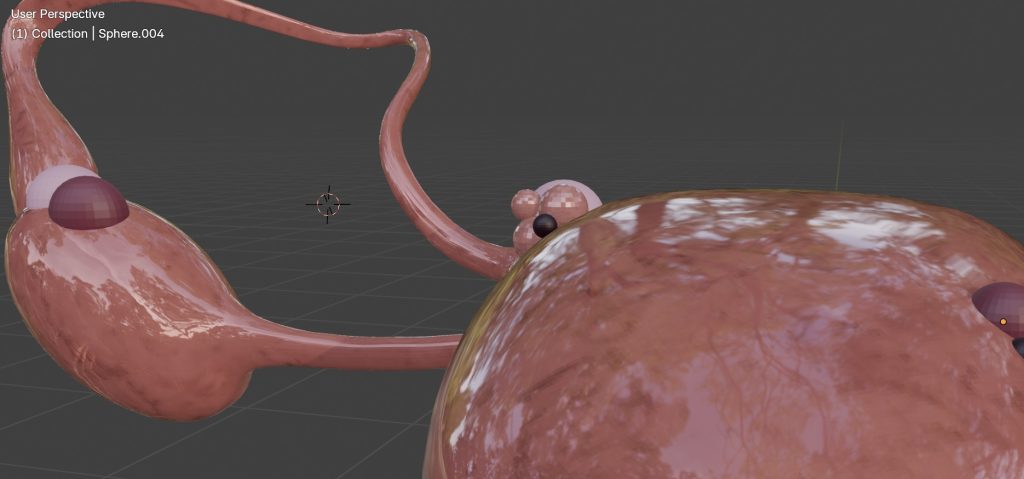
To make sure I created accurate Endo Lesions, I referenced medical and educational diagrams/images that show how endometriosis tissue can vary in colour and appearance depending on stage and severity. After importing the Uterus model, I added sphere meshes to represent endometriosis lesions and positioned them so they intersected with the original geometry, allowing the tissue to appear embedded rather than placed on the surface. I adjusted the mesh and UV mapping where needed to blend the added tissue. I then used independent UV spheres of different sizing and colour to represent the varying types of endo.
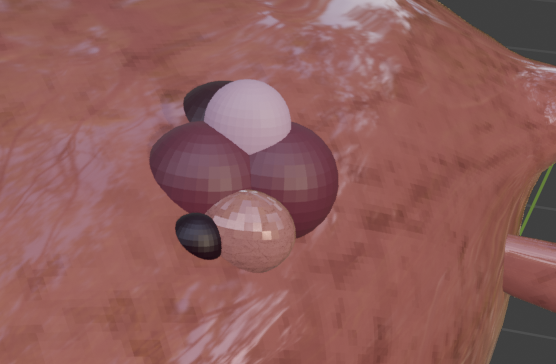
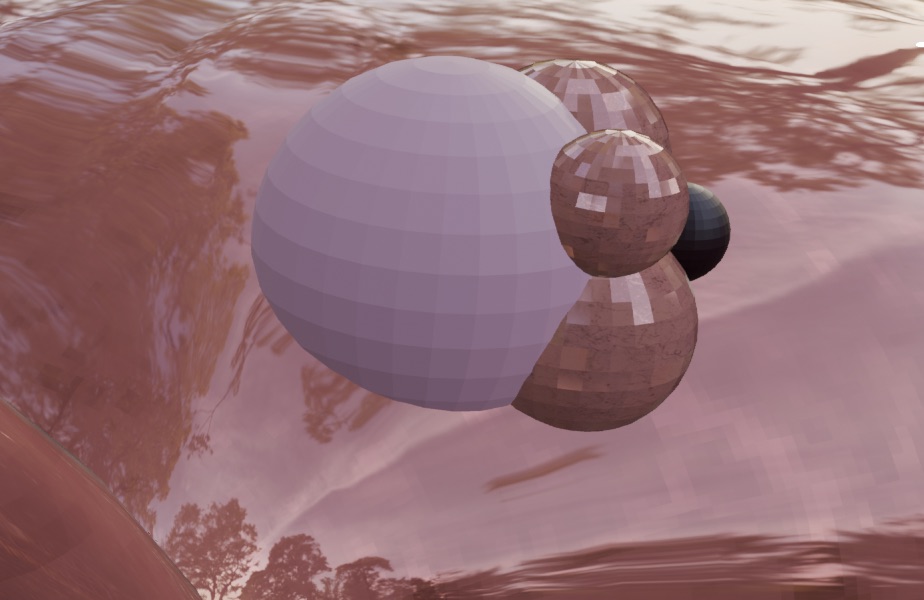
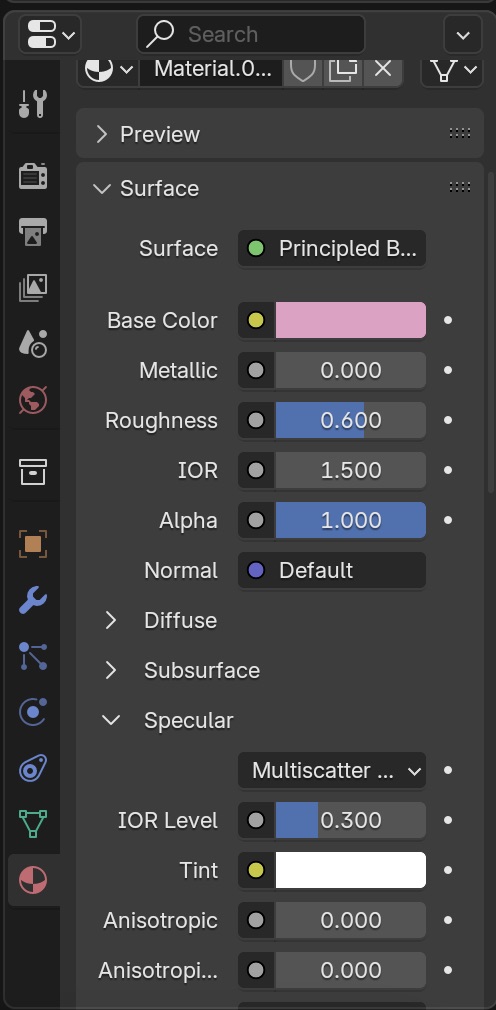
I organised the model in Blender by naming each lesion separately, To make it easier to turn lesions on and off while testing, and keeps things ready for potentially adding interactions later in AR. For the lesions themselves, I created new materials and kept the colours muted rather than bright or graphic. I adjusted roughness and specular settings so the tissue looks more clinical and realistic, helping the model stay informative without feeling overwhelming or confronting.
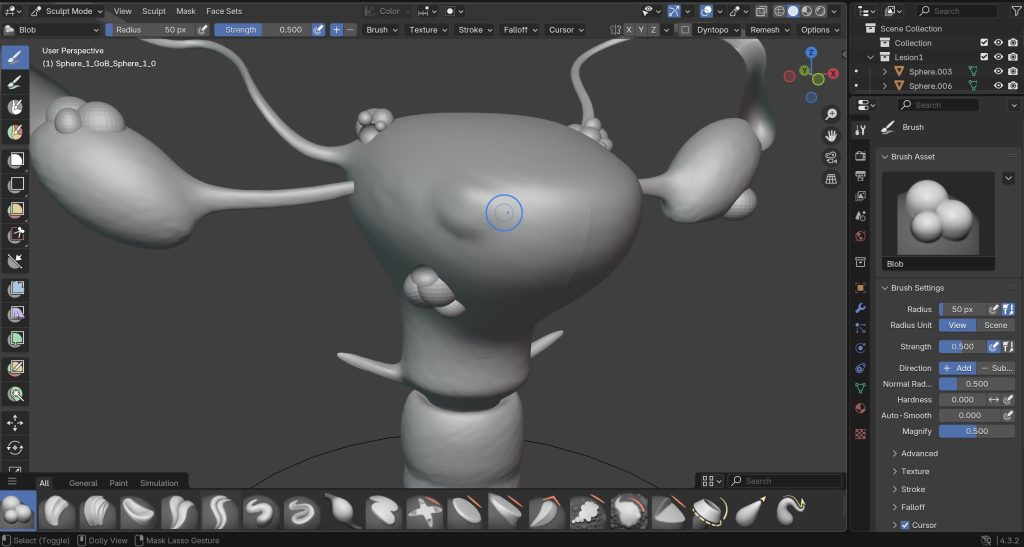
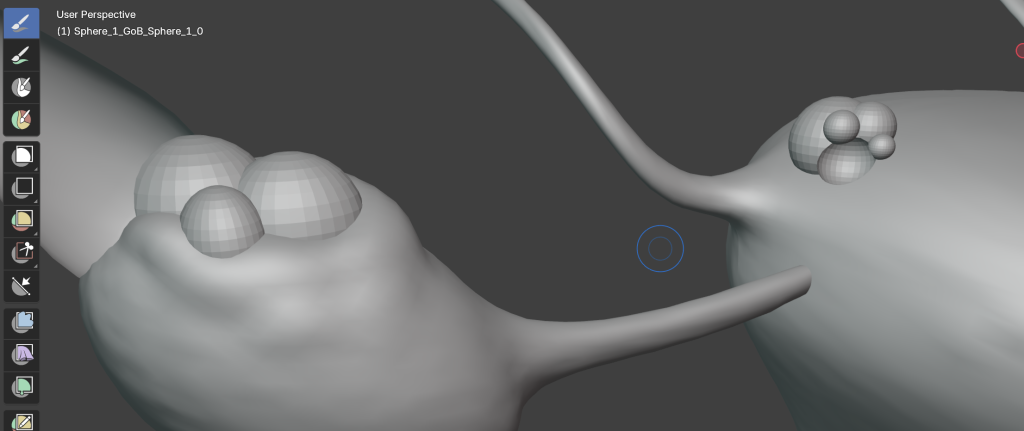
I used Blender’s sculpting tools, including the blob brush, to slightly distort the uterus surface and create the effect of inflammation around the lesions. This helped the tissue feel more organic and realistic, rather than looking like separate shapes placed on top of the model.
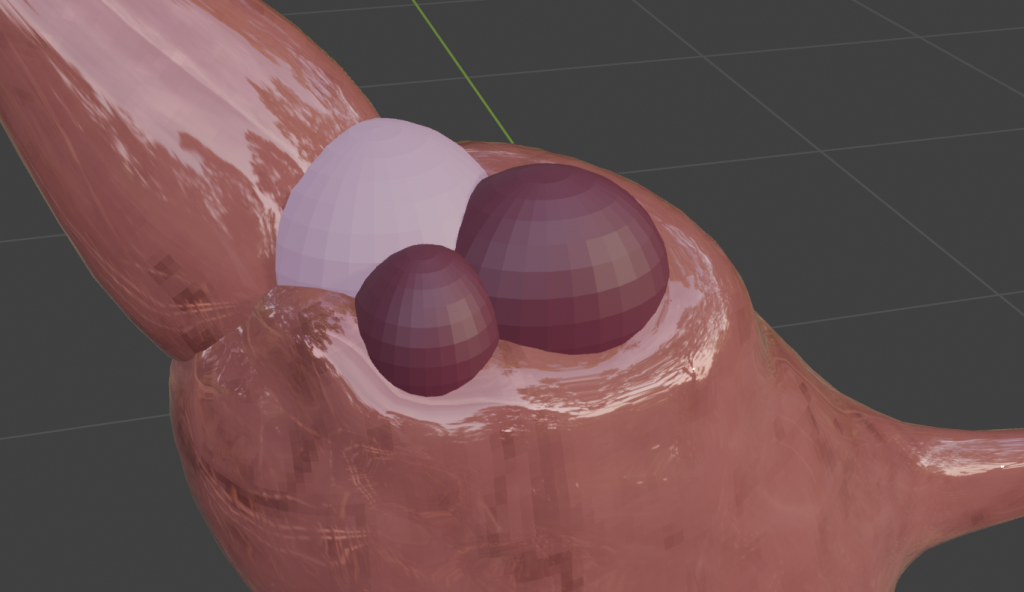
Above – Rendered view on sculpted uterus wall, and how it makes the model feel more cohesive.
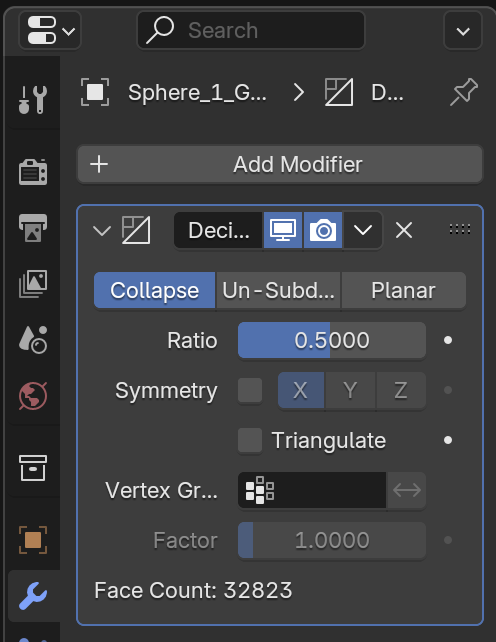
Right – After sculpting, I applied the Decimate Modifier to the uterus model to reduce the polygon count and keep the file lightweight.
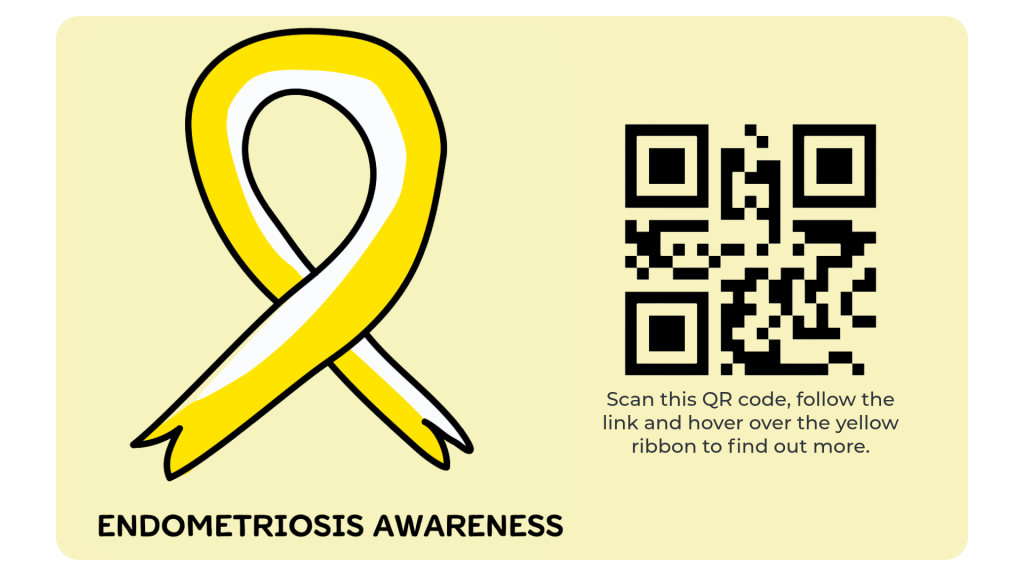
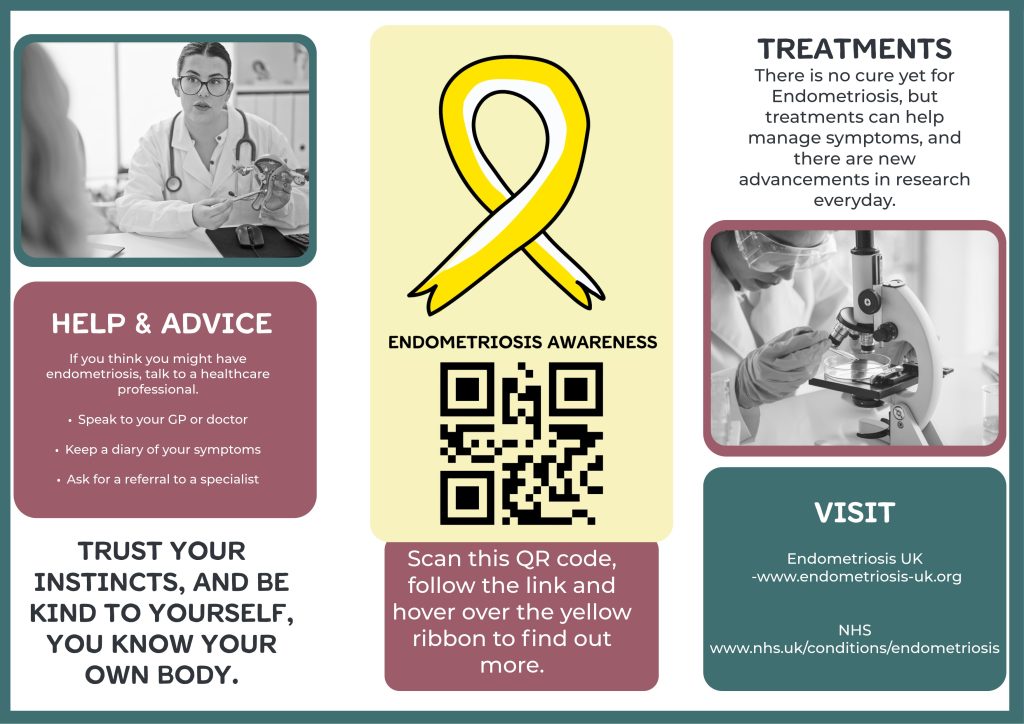
Next I exported my model, and used it to create a simple image target platform on 8th wall that corresponds to the trigger image I made on my poster and other printable assets.
First+basic attempt image tracking.
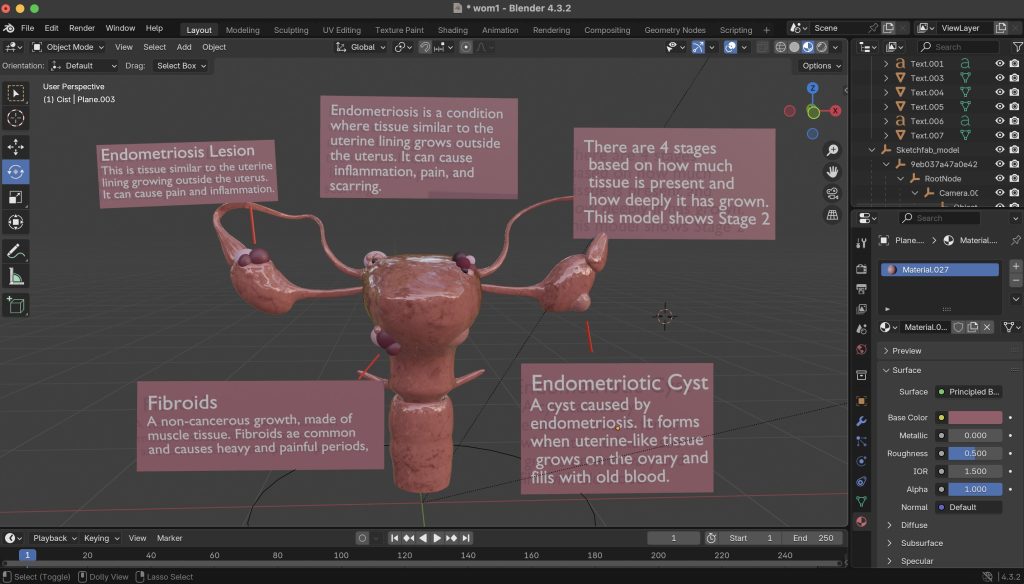
I think this first basic attempt went well, but I am wanted to expand my model to add informative labels, and also make some animation to make the platform feel more informative.
I explored the idea of potentially adding text to 8th wall, but the version I am using did not support this – so I added text on blender and re exported the image and set up a new project.
I learnt from this that I should try and keep the labels within a confined space – as too much phone movement can see the image tracking and the uterus disappears. I also decided to make my lesions larger.
I considered adding animation or sound to the AR experience, but due to the serious and educational nature of the project, I chose to focus on clear, static image tracking. This keeps the experience respectful, accessible, and reliable in a web-based AR environment. It also supports inclusivity for viewers whose first language may not be English or who may find reading difficult. I avoid graphic anatomy, gendered colour coding, and potentially triggering motion or audio to ensure the project remains sensitive and accessible.
Showcase of AR platfrom working with final uturus model.
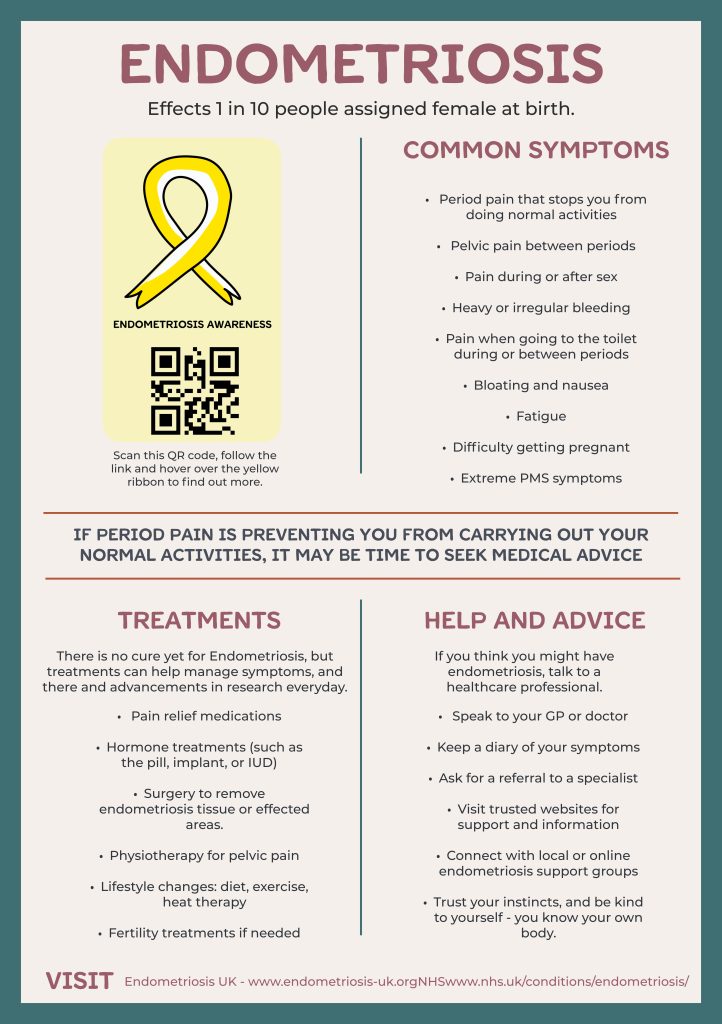
Final Presentation.
Bibliography.
Altomara, Deanna. “Endometriosis.” WebMD, WebMD, 14 Nov. 2016, www.webmd.com/women/endometriosis/endometriosis-causes-symptoms-treatment.
Jeffri, Nor Farzana Syaza, and Dayang Rohaya Awang Rambli. “A Review of Augmented Reality Systems and Their Effects on Mental Workload and Task Performance.” Heliyon, vol. 7, no. 3, Mar. 2021, p. e06277, https://doi.org/10.1016/j.heliyon.2021.e06277.
News-Medical. “What Is Endometriosis?” News-Medical.net, Mar. 2010, www.news-medical.net/health/What-is-Endometriosis.aspx.
ResearchGate. “ResearchGate | Share and Discover Research.” ResearchGate, ResearchGate, 2024, www.researchgate.net/.
Sketchfab. “Sketchfab.” Sketchfab, 16 Jan. 2023, sketchfab.com/3d-models/uterus-0c543295600d4feaa3bf723cc1bb1730. Accessed 16 Jan. 2026.