Open Brush (VR Painting)
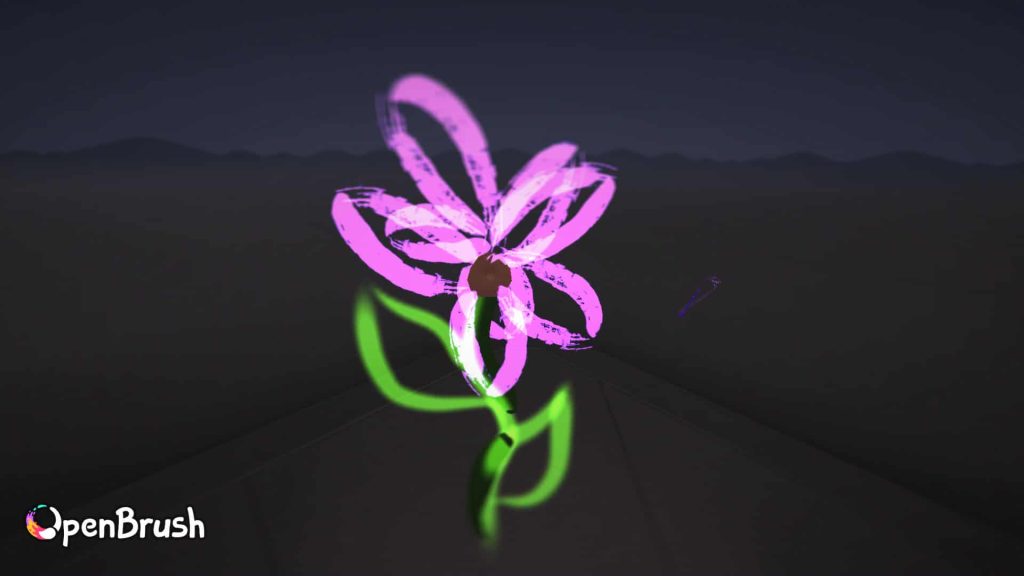
In Open Brush, I started by drawing a small individual flower.
I immediately found it interesting how my brain was expecting to draw a flat image, but the lack of pressure on a canvas makes it hard to judge depth.
Even something small and simple like this flower I had to move around the image and make sure it flowed from all angles.
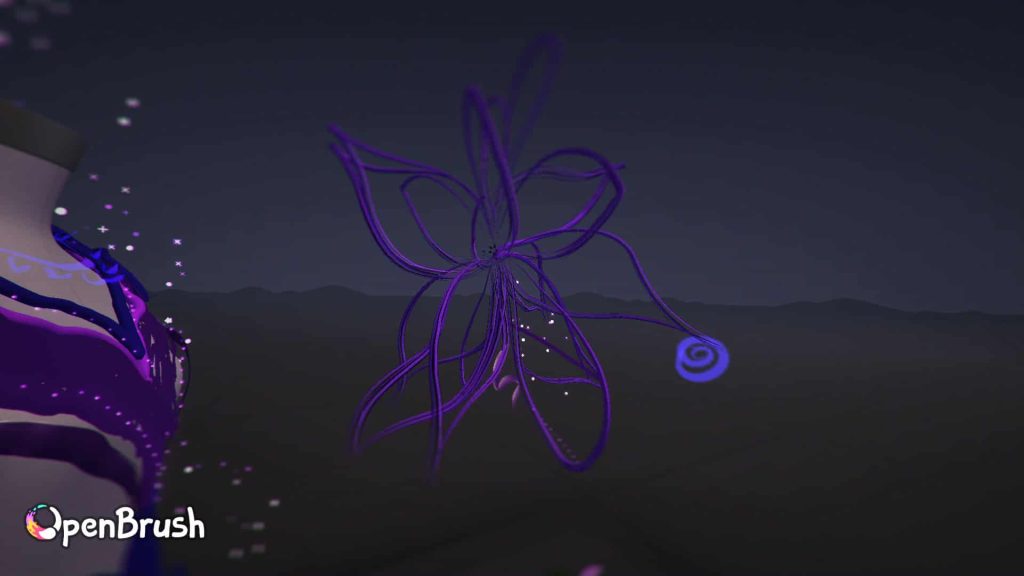
Next I used the mirror tool to create a separate, much bigger flower. Using the mirror effect was interesting as over all it felt more dynamic and balanced, but it also added an element of rigidity to the process which I didn’t enjoy as much as being able to draw each element individually. I could see how this would be useful for a more structured design.
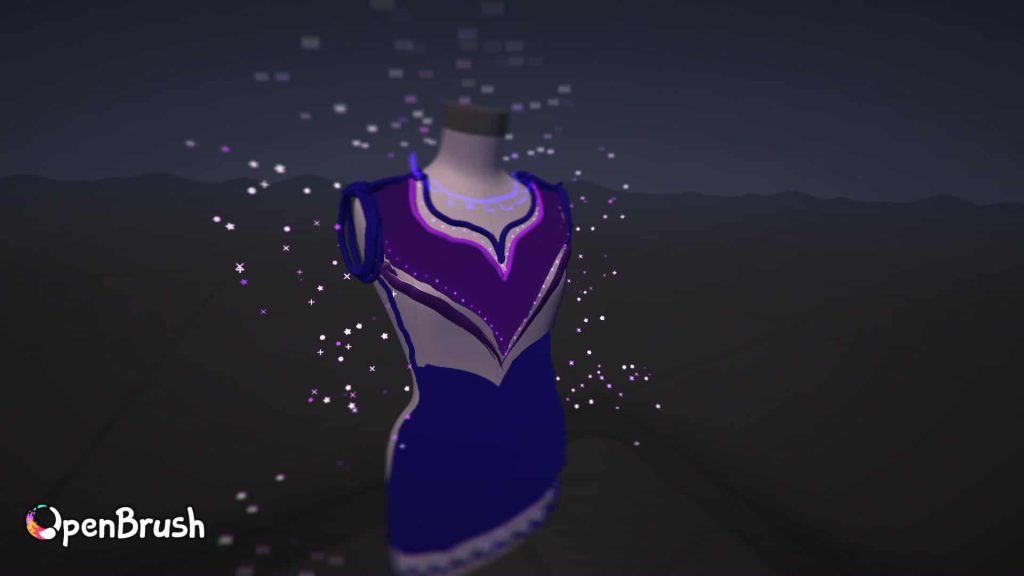
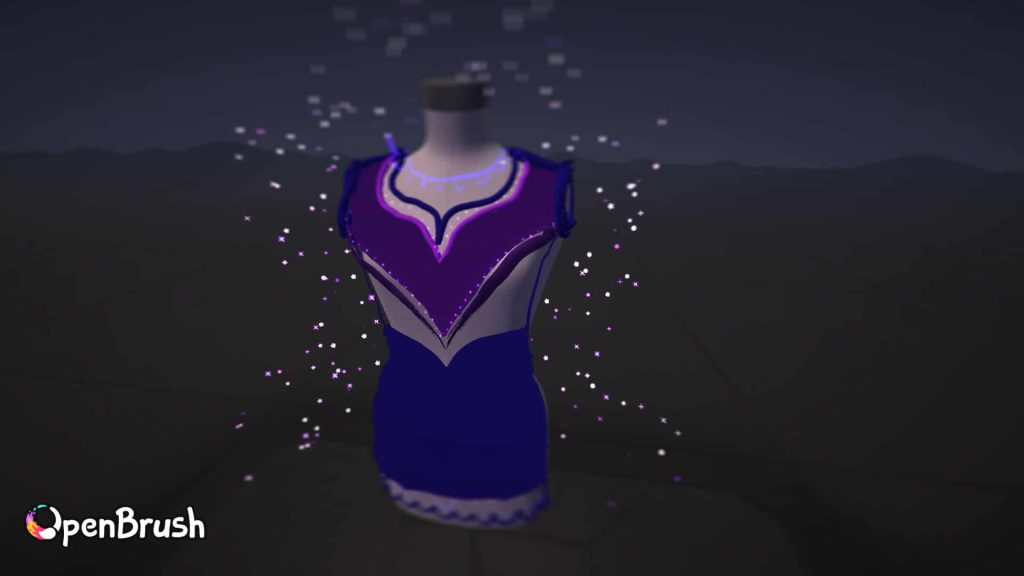
I finished this experimental phase by creating a dress on a mannequin, using a range of brushes, colours and techniques to see what I did and didn’t enjoy. I think this is something that I could get very lost in, creating shapes and patterns – but it wouldn’t almost end there for me.
I also thought it was abit tricky to get the proportions right since everything shifts depending on your viewpoint in VR. I kept walking around to check how the shapes looked from different sides and that the proportions on the mannequin looked accurate to real world. It was tricky figuring out how scale and placement affected the whole piece. Sometimes something that looked balanced from one side felt completely off from another angle.
Research
After experimenting a little I created a fig jam mood board about how I could potentially use Open brush in the future just to try and gain some extra inspiration.
Figjam Mood board. Using Pinterest. (pinterest,25)
A simple collection of ideas and references about working in VR and using Open Brush. Including colour and texture inspiration, and a few examples of how artists use space and light in VR art. The mood board helped inspire me for how I could plan something more detailed in the future in Open Brush.
My Second Scene.
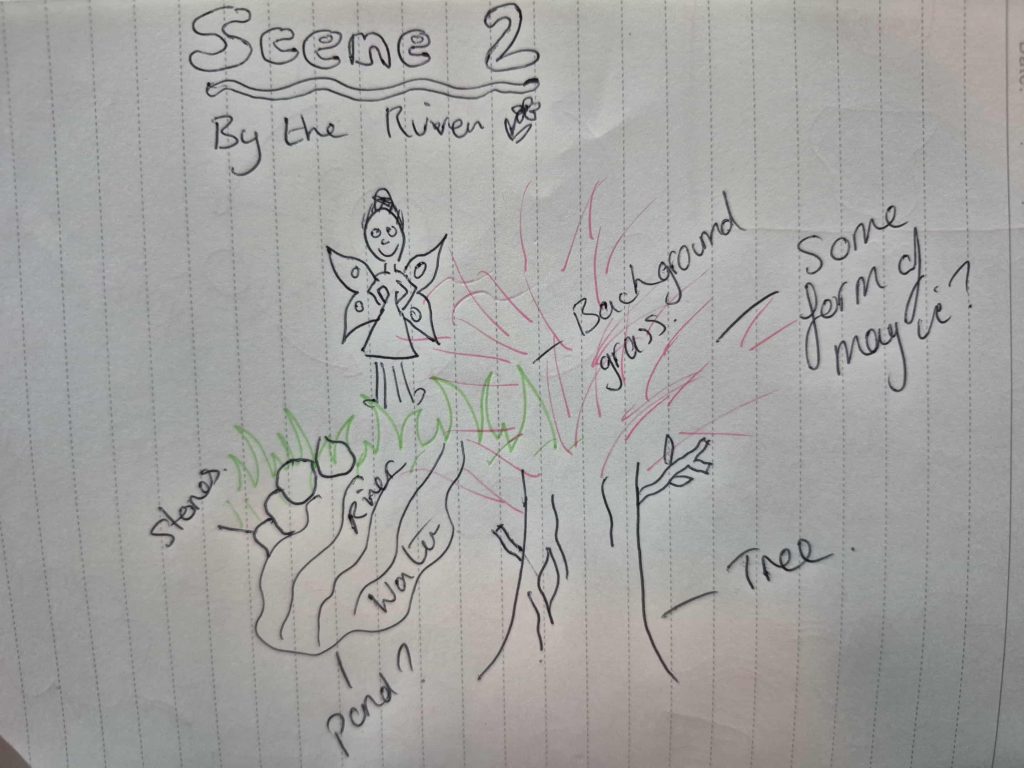
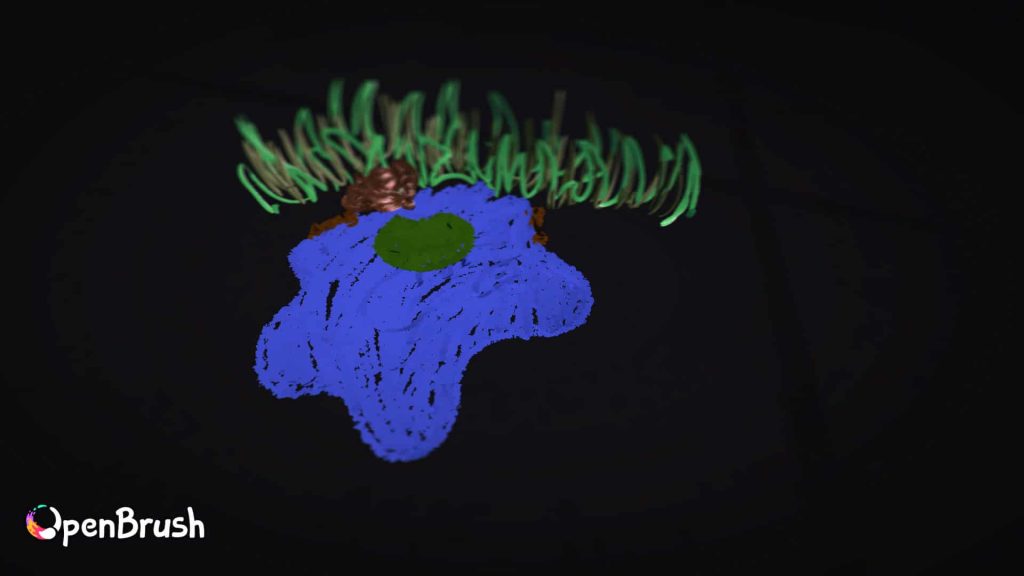
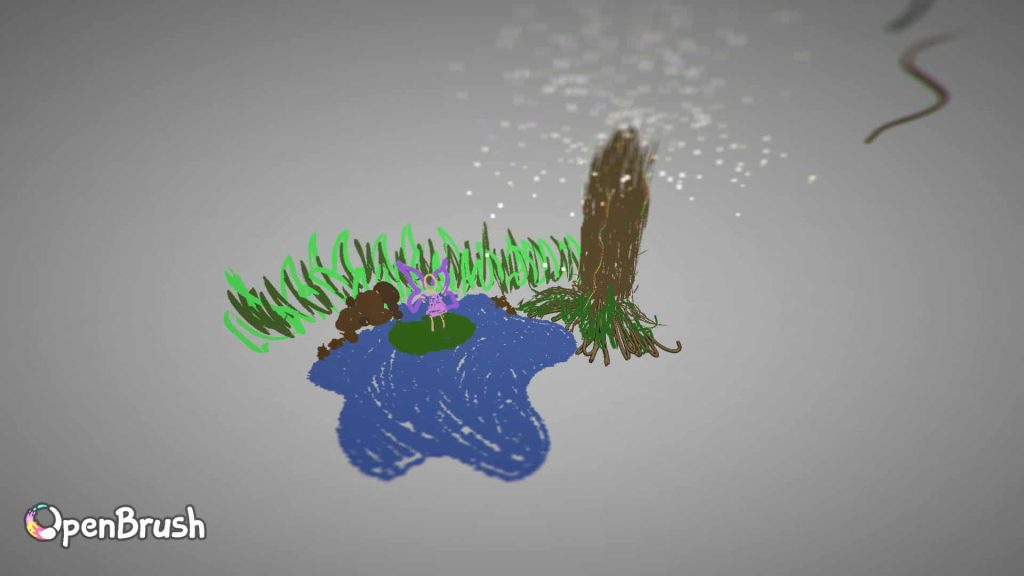
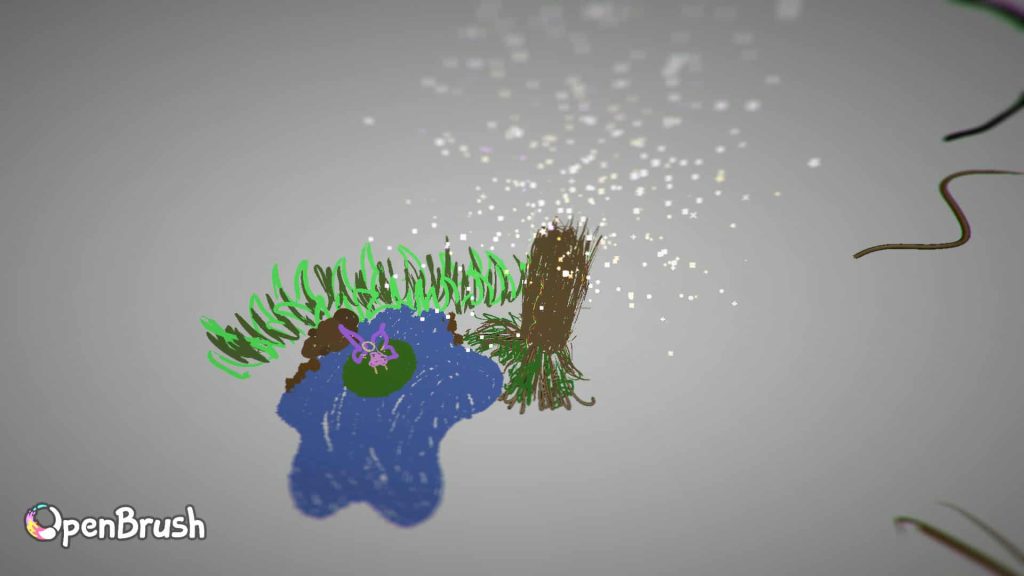
I created a small pond scene with a fairy and a tree, adding layered 3D elements for depth. I focused on scale, visual hierarchy, and flow. I Also focussed on how I could guide the viewer’s eye from the fairy to across the pond, then the tree – by using moving paint options to draw the users eye across. Hopefully this is the start to creating a balanced and immersive 3D environment through trial and practice.
Bib.
https://www.figma.com/board/v97jZZSRInfww9kF3kvodO/Untitled?node-id=0-1&p=f&t=koA2UxF2nEGJUWlP-0
https://uk.pinterest.com/