In my animation, I feel I successfully applied Edward Tufte’s ideas to create a clear and engaging Animation that shows a Metamorphosis. I focused on the three key concepts I discussed in my previous post, as I feel there where most relevant to the theme of Metamorphosis. Inspired by Calder’s artwork, I aimed to balance detail with simplicity, making sure each element worked both on its own and as part of the bigger picture.
Micro/Macro Readings.
To make the micro/macro structure work in my animation, I ensured each orb had a distinct path that could be followed from beginning to end. This allowed viewers to engage with a single orb’s journey (micro) while also seeing how all the orbs together formed a larger, cohesive narrative (macro).
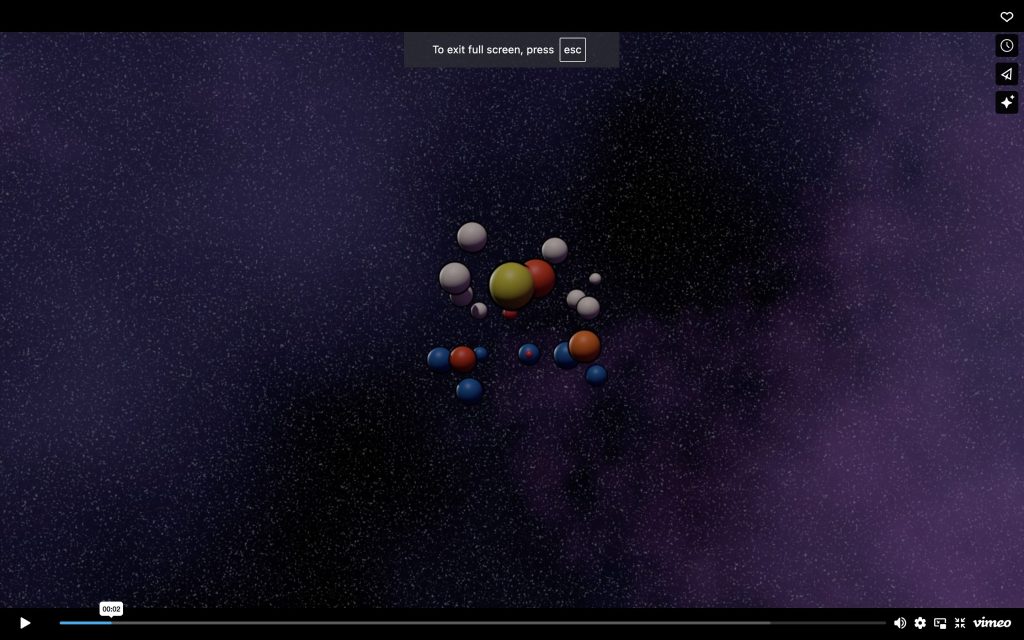
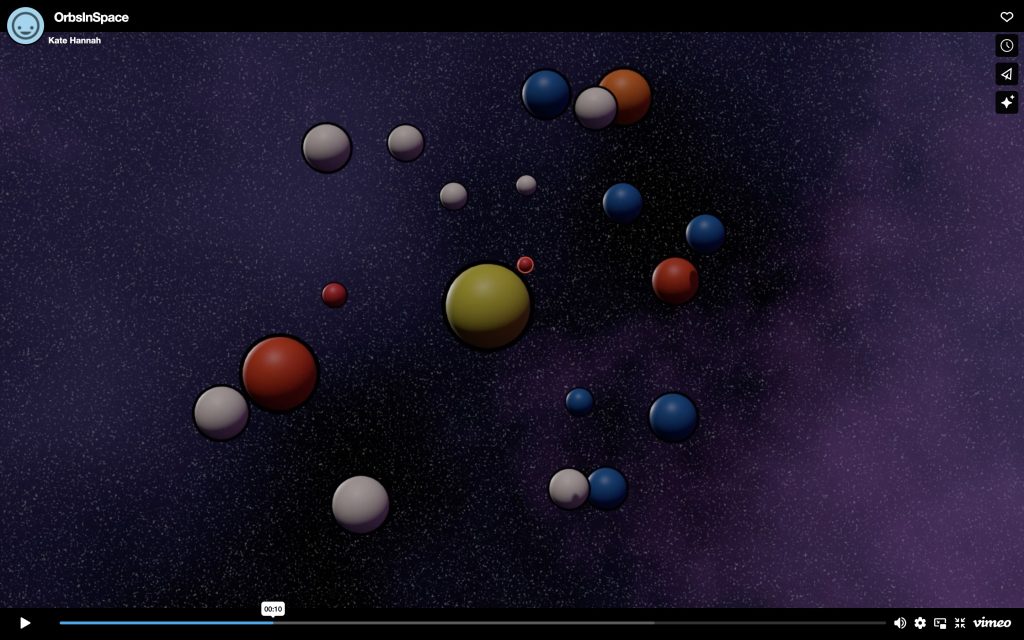
In the above screenshots, you can see how each planet can still be followed from 4 to 10 seconds. This means viewers can track a single planet’s journey while also seeing how they all move together as part of the bigger animation. I carefully designed their movement, timing, and interactions so they feel connected rather than random. Making sure the animation feels unified while each planet still follows its own path.
Layering and Separation.
In my animation I used layering techniques to keep things visually clear. I kept clarity and separated elements to prevent clutter and ensured that overlapping orbs didn’t create unintended shapes or confusion. (until intentional).
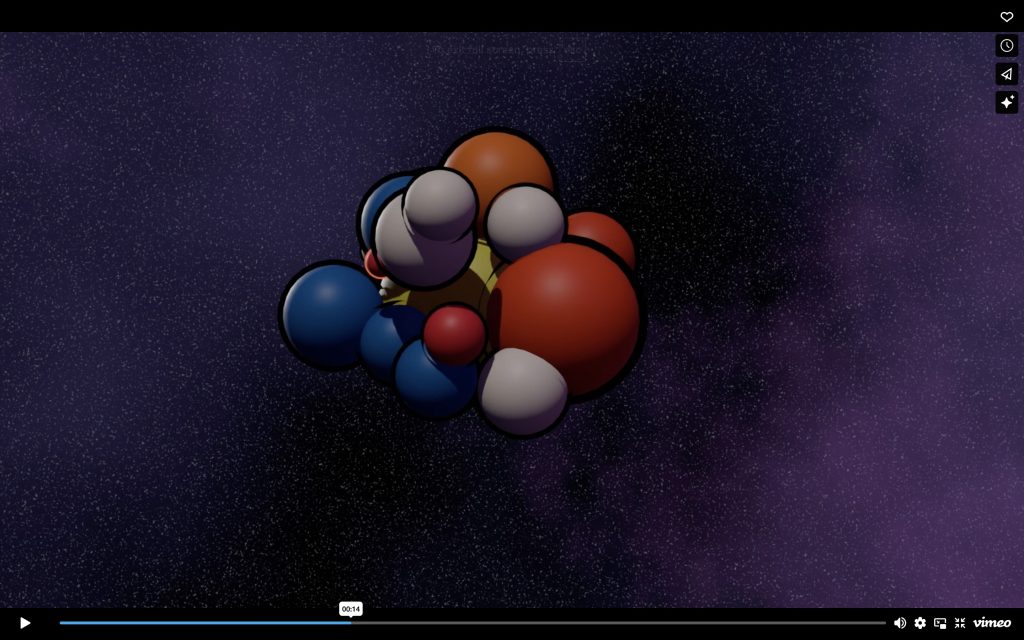
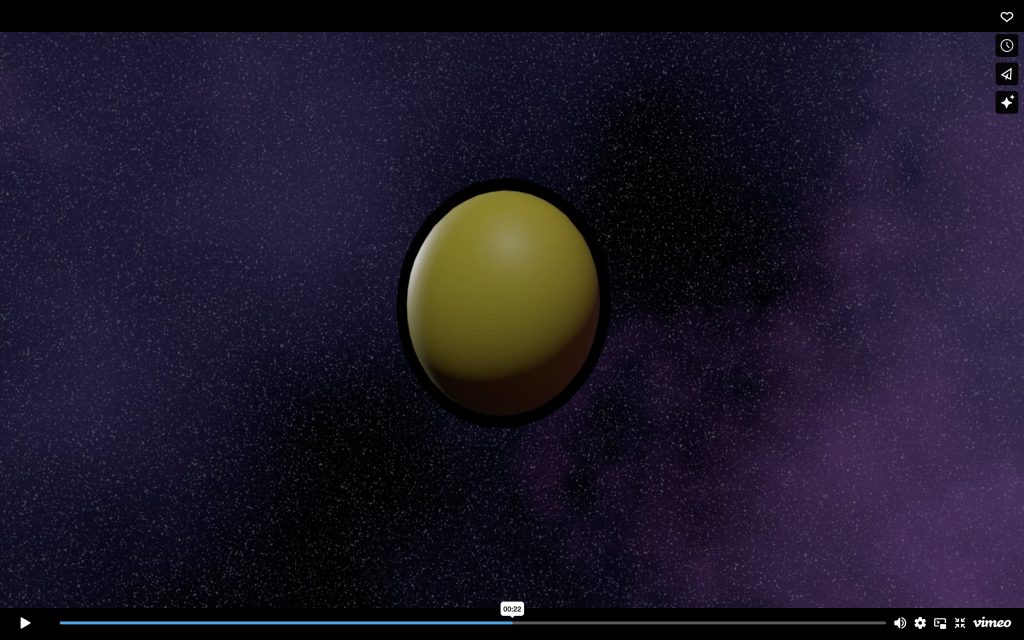
Above you can see how negative space played an important role in my animation. Keeping the composition balanced, allowing each element to stand out while still feeling part of the whole. This helped maintain a sense of depth without overwhelming the viewer. I also embraced the use of negative space around the focal point of the animation to help keep the viewer attention where I intended. Always keeping in mind Tufte’s “1+1=3” theory.
Narratives of Space and Time.
To represent time and transformation, I used movement, and shape changes throughout the animation paired with my choice of sound. I structured the animation so that each orb evolved over time, espiecially towords the end.
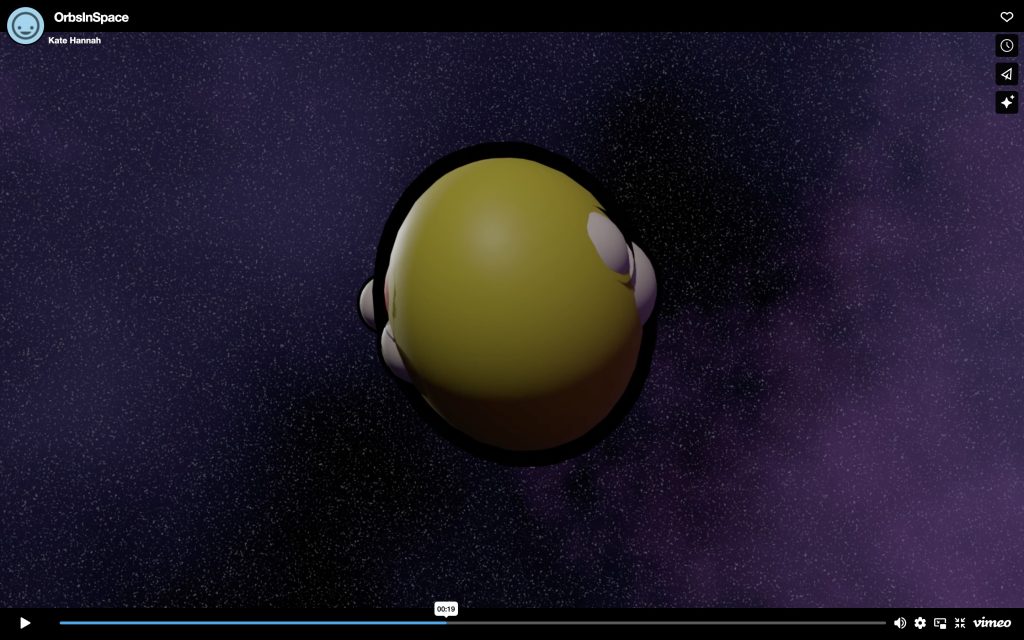
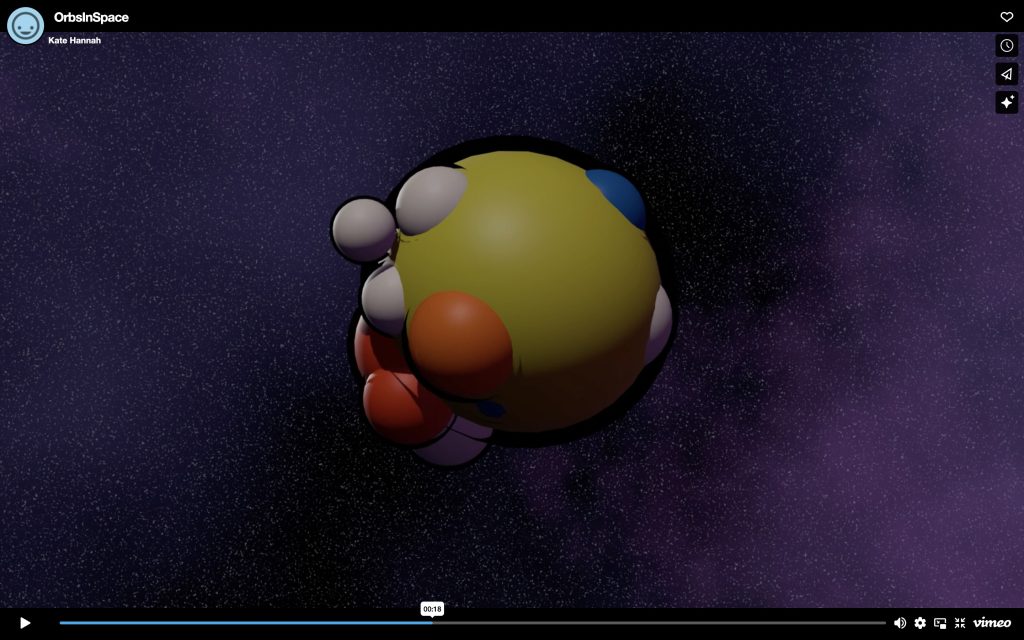
Above, you can see how I slowly used the yellow orb to envelop the other orbs. By making this process gradual and showing a slight struggle, I was able to illustrate the passage of time. This also created a sense of metamorphosis that feels organic and engaging. I believe this helped make the visual narrative clearer and more immersive.
To Summerise.
By applying these principles, I made sure my animation was both detailed and easy to understand. The micro/macro readings let viewers follow individual orbs while still seeing the bigger picture. Layering kept everything clear and uncluttered, while time-based transitions added movement and meaning.
Overall I believe I have created final animation very much in line with my Brief.
Bibliography.
Hannah, Kate . “Vimeo.” Vimeo.com, 2025, vimeo.com/manage/videos/1064244873. Accessed 12 Mar. 2025.
Tufte, Edward Rolf . Envisioning Information. Cheshire, Connecticut, Graphics Press, 1990.